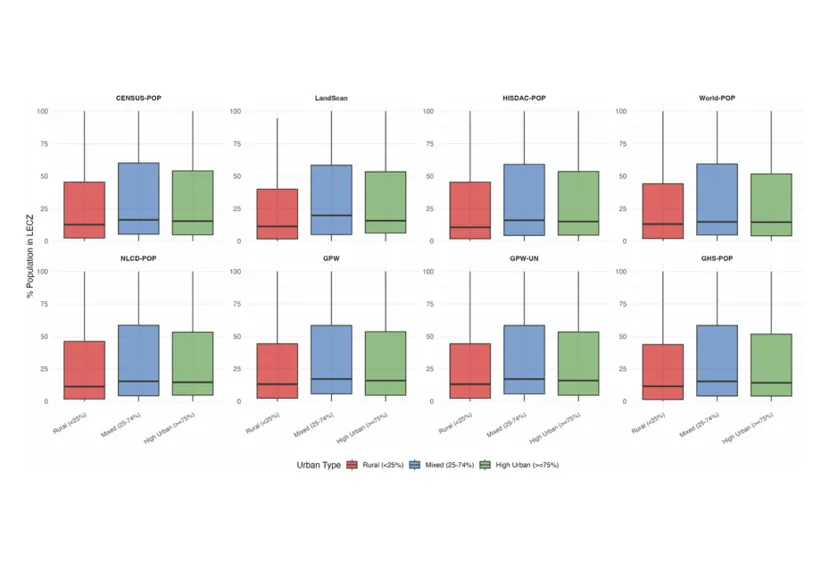
CIESIN GIS Specialist Hasim Engin has co-authored a new study evaluating how widely used global population datasets perform in estimating the number of people exposed to coastal hazards such as sea-level rise. Focusing on the U.S. Low Elevation Coastal Zone—areas below 10 meters in elevation—the research compares five major global population grids (GPW, GPW-UN, GHS-POP, LandScan, and WorldPop) with high-resolution U.S. Census block data from 1990 to 2020. The study finds notable discrepancies across datasets, with national estimates for 2020 differing by as much as 6.4 million people, or 19 percent, and simpler mapping approaches tending to overestimate populations in at-risk areas. Although all datasets show that coastal populations have grown faster than inland populations—by 2 to 7 percentage points over the past three decades—differences at the local level are even more pronounced, with some counties varying by tens or hundreds of thousands of residents. The findings highlight how dataset selection and methodology can significantly influence climate risk assessments, underscoring the importance of high-resolution data and transparent analytical approaches for effective coastal planning.
Portions of this news blurb were edited with the assistance of AI tools to improve clarity and readability. All content was reviewed and validated by the authors.