New Nature Cities paper and dataset reveal how urban populations are changing worldwide
A new paper in Nature Cities, “Global divergence in urban demographic change and migration patterns,” presents a global view of how the age, sex, and migration patterns of cities changed between 2000 and 2020. The study, led by Andrew Zimmer with co-authors Nina Brooks, Andrea Gaughan, and former CIESIN postdoc Cascade Tuholske, shows that urban growth is not simply a matter of more people moving to cities. Cities are growing, aging, and changing in increasingly different ways, with important differences between large metropolitan areas and smaller or mid-sized cities.
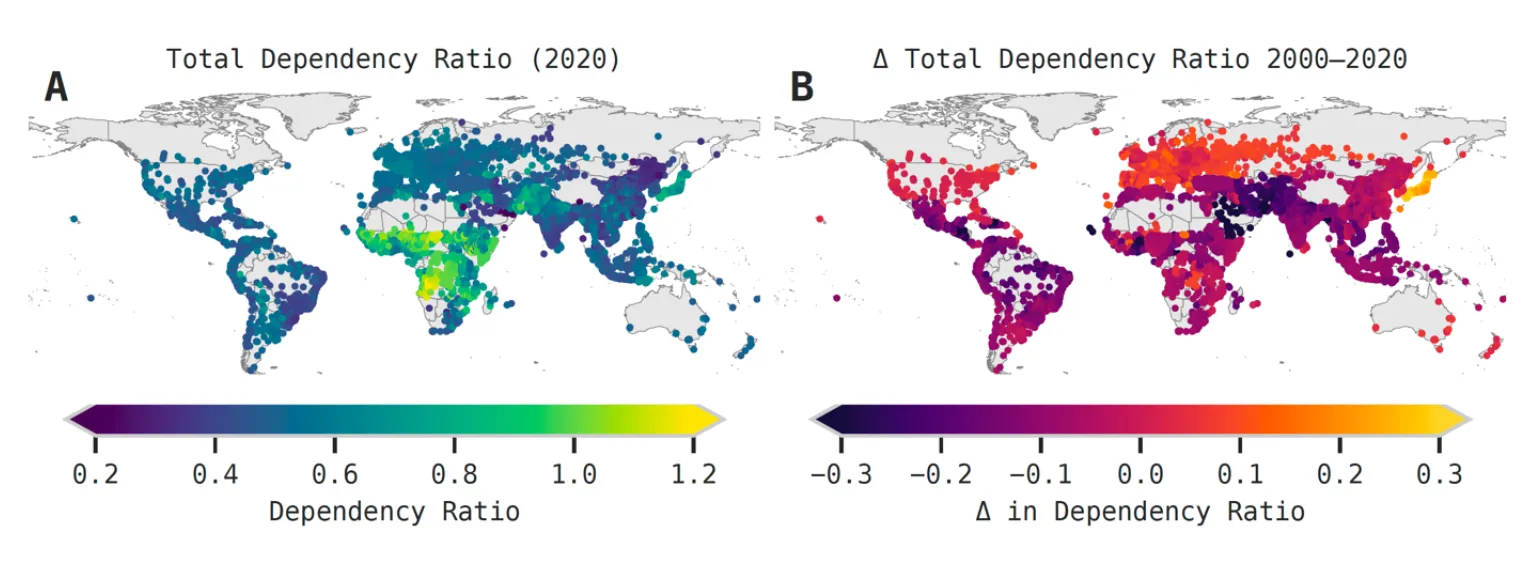
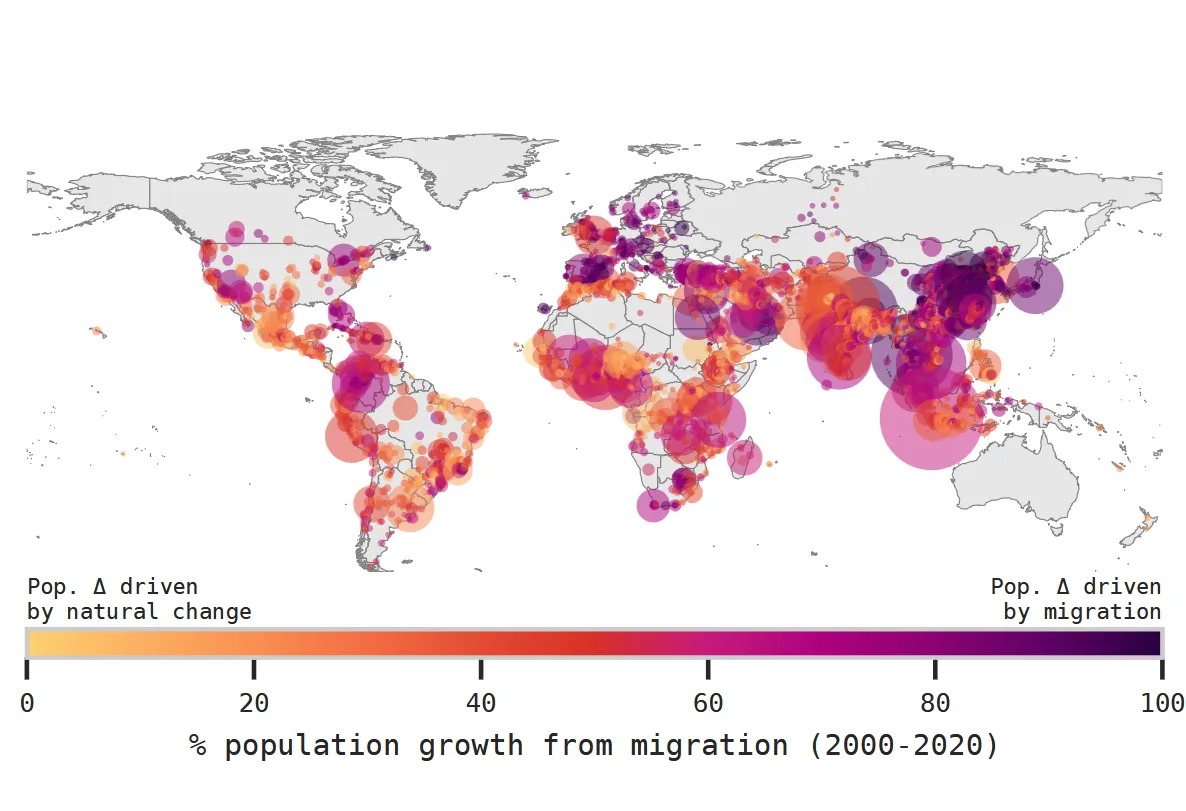
The paper also introduces the Global Urban Demographic Dataset (GUDD), a new city-level dataset that provides annual demographic estimates for more than 10,000 urban settlements worldwide. GUDD is hosted through the CIESIN collection on Harvard Dataverse and is designed to support research on urbanization, population change, migration, climate risk, development, and planning.
Together, the paper and dataset provide a new foundation for understanding who lives in cities, how urban populations are changing, and why those changes matter. The data are already supporting related research, including a recent Environmental Research Letters paper, “Synthesizing land use and demographic change in Southeast Asia’s smaller urbanized areas from 2000–2015,” which applies the data framework to examine demographic and land-use change in rapidly growing smaller cities.