Center for International Earth Science Information Network (CIESIN) Columbia University
Home PageContact Info

About Us
Programs and Projects
Data & Information Resources
Education & Outreach
News and Events


2013 News & Events Subscribe to CIESIN News

Archives: 2007 and older
Data Needs for Understanding Urbanization and for Developing Climate Indicators Examined in Washington DC Meeting

May 10, 2013

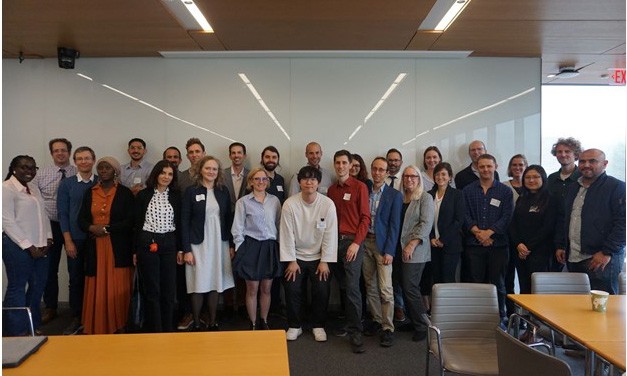
How remote sensing data from the NASA Earth observation satellites can be used in conjunction with socioeconomic data to improve assessment of urbanization patterns and trends was one of two main topics addressed in a technical interchange meeting organized by SEDAC, the NASA Socioeconomic Data and Applications Center operated by CIESIN, May 8–9 in Washington, D.C. The second topic was the potential role of NASA data centers like SEDAC in supporting the development of a system of indicators for the U.S. National Climate Assessment (NCA), a Congressionally-mandated assessment of climate change and its impacts in the United States.

As part of the meeting, two parallel breakout sessions were held with members from the SEDAC User Working Group (UWG) and the UWG of the Land Processes Distributed Active Archive Center (LP DAAC), to take advantage of their combined expertise and understanding of remote sensing and socioeconomic data. Experts from NASA, the NCA, other NASA data centers, and the World Bank also participated in person and by teleconference. Later in the meeting, SEDAC manager Robert Chen, deputy manager Alex de Sherbinin, and lead project scientist Marc Levy briefed the SEDAC UWG on recent activities and progress, including improvements to the SEDAC Web site and the expanding range of scientific citations of SEDAC data.

The SEDAC UWG is chaired by Molly Macauley of Resources for the Future. The UWG provides strategic advice and guidance to SEDAC and NASA and reviews SEDAC data development and dissemination plans.


Political and Civic Leaders from Argentina Visit the Earth Institute

May 3, 2013

More than a dozen political and civil society leaders from Argentina came to the Columbia University Morningside Heights campus in New York May 2 to meet with scientists from CIESIN and the International Research Institute for Climate and Society (IRI). Organized by Fundación RAP, the Red de Acción Politica or Policy Action Network, the bipartisan delegation was visiting in order to learn more about policy options related to climate variability and change and the role of science in sustainable development. CIESIN director Robert Chen gave a presentation on the use of spatial data in applications and decision making regarding sustainable development, and deputy director Marc Levy described ongoing international efforts to develop socioeconomic scenarios useful for climate vulnerability and adaptation analyses. IRI director Lisa Goddard provided an overview of climate variability and change in South America and their impacts on agriculture and other sectors. The Fundación RAP brings together politicians from different parties and levels of government in Argentina to encourage pluralism in political leadership and to expand dialogue between civil society and politicians.

See: Fundación RAP/Policy Action Network


New Columbia Institute to Address Data for Smart Cities

April 30, 2013

Making cities “smarter” was the focus of a planning meeting at Columbia University April 24 organized by the new Institute for Data Sciences and Engineering (IDSE) of the Fu Foundation School of Engineering and Applied Science. Chaired by Andrew Smyth of the Department of Civil Engineering and Engineering Mechanics, the IDSE Smart Cities Center aims to utilize new information technologies and data management approaches to improve the sustainability of urban infrastructure and buildings, address problems with aging urban infrastructure, and facilitate everyday activities in a crowded urban environment. CIESIN director Robert Chen is participating in the center as an Affiliated Member, and gave a brief presentation on relevant CIESIN projects on urban earthquake and flood risks and mapping of Superfund sites.

See: Institute for Data Sciences and Engineering, Smart Cities Center


New Online Resource Supports Learning About Scientific Data Management Practices

April 29, 2013

CIESIN senior digital archivist Robert Downs created seven modules for the online learning resource, Data Management for Scientists Short Course, which was developed as a collaborative effort of the ESIP Commons, the knowledge repository of the Federation of the Earth Science Information Partners (ESIP). The short course aims to improve data management practices of scientists and data management professionals. Modules developed by Downs include Providing Access to Your Data: Access Mechanisms,” “Providing Access to Your Data: Determining Your Audience,” “Providing Access to Your Data: Rights,” “Responsible Data Use: Data Restrictions,” “Working with Your Archive: Broadening Your User Community,” “Providing Access to Your Data: Tracking Data Usage,” and  “Providing Access to Your Data: Handling Sensitive Data.” All of the modules in the short course are freely available for use under a Creative Commons Attribution License, and may be used individually or combined to support instruction and learning on data management, dissemination, stewardship, and related issues.

See: ESIP Commons Data Management Short Course


CIESIN Represented at Annual Population and Geography Conferences

April 17, 2013

CIESIN staff members participated in two recent scientific conferences, the annual meetings of the Population Association of America (PAA) and the Association of American Geographers (AAG). Associate research scientist  Susana Adamo organized two sessions at the PAA, held in New Orleans April 11–13. The first session, in which she served as the discussant, focused on urbanization and climate change. Presenters included former CIESIN scientist Deborah Balk of the CUNY Institute for Demographic Research. The second session, which Adamo chaired, addressed the demographic dimensions of climate change and included presenters from the U.S., Burkina Faso, and Ghana. More than 2,000 demographers, sociologists, economists, public health professionals, and other population experts attended the conference.

At the AAG annual meeting in Los Angeles April 9–13, geographic information specialist Tricia Chai-Onn staffed the NASA booth, helping to increase awareness and understanding of NASA Earth science data and services, including those offered by the NASA Socioeconomic Data and Applications Center (SEDAC) operated by CIESIN. The AAG meeting attracts more than 5,000 geographers, Geographic Information System specialists, environmental scientists, and other scholars from around the world, providing an excellent opportunity to interact directly with SEDAC users.

See: PAA Session 78: “Urbanization and Climate Change“—information and papers
       PAA Session 93: “Demographic Dimensions of Climate Change“—information and papers


Students from France Begin Spring Internships at CIESIN

April 16, 2013

CIESIN welcomed three interns April 16 from the École Polytechnique in Paris: Guillem Bardy, Juliette Mansard, and Sarah Le Net. Bardy is majoring in environmental sciences and is working with senior research associate Alex de Sherbinin to study flood resilience in New York City, Mumbai, and Ho Chi Minh City. Mansard, also an environmental sciences major, is working with associate director for geospatial applications, Mark Becker, on a new project to develop a decision support system on flood hazards for the lower Hudson River Valley. Le Net is majoring in renewable energies and civil engineering and is collaborating with information scientist Xiaoshi Xing to retrieve and analyze sulphur dioxide emissions data by region and by country for the period 1850 to 1969. All three interns are third-year students enrolled in a four-year program at École Polytechnique that leads to the equivalent of a U.S. masters degree. This is the sixth year that CIESIN has hosted three-month internships arranged through the Alliance program, a joint venture between Columbia University, École Polytechnique, Sciences Po, and the Université de Paris 1 Panthéon Sorbonne.

See: Alliance Program


April Brings Visitors to New York for Collaborative Discussions on Data Issues

April 15, 2013

CIESIN hosted four sets of visitors April 8–11 to discuss diverse data needs regarding education, environmental policy, medical research, and microfinancing. On April 8, consultants Chuck Kent and Mary Mederios Kent came to the Lamont campus to discuss potential use of CIESIN data and visualizations in a new science museum being developed by the Roberto Marino Foundation in Rio de Janeiro, Brazil. The Museum of Tomorrow will emphasize Earth's “vital signs” in a range of interactive and immersive exhibits. This visit was followed by a meeting April 9 with Josh Galperin, Angel Hsu, and several other colleagues from the Yale University Center for Environmental Law & Policy (YCELP), who are working with CIESIN deputy director Marc Levy, senior staff associate Alex de Sherbinin, and other CIESIN staff to plan the 2014 Environmental Performance Index (EPI).

On April 10, CIESIN director Robert Chen met with Alexandra Henrion-Caude, head of the Genetics Lab at the Imagine Institute of Genetic Diseases in Paris and a senior researcher with France’s National Institute of Health and Medical Research. Dr. Caude, an expert on rare genetic diseases, is exploring new ways to make scientific data more accessible and usable. Her seven-week visit to the United States was sponsored by the Eisenhower Fellowships, an international exchange program based in Philadelphia.

The use of geospatial data and techniques to improve microfinance activities in developing countries was the subject of the fourth visit on April 11. Paul Hamlin and Milan Patel of FINCA, a global charitable organization focused on providing financial services to the world′s lowest-income entrepreneurs, met with Chen, Levy, and others to plan collaboration in assessing poverty outreach and social performance.


New Report from CIESIN and Yale Examines the Policy Uses of Environmental Indicators

April 12, 2013

Report cover

Over the past few years the number of environmental indices has increased dramatically. However, little attention has been given to how they have actually been used in policy and decision making. A new report produced by CIESIN and Yale University, Indicators in Practice: How Environmental Indicators Are Being Used in Policy and Management Contexts, addresses this gap by examining the role of indicators in environmental policy making, and by quantifying measurable impacts. The report assesses both the theory and practice of indicator use, drawing on a range of case studies from around the globe. The resulting case studies are available in the report and on Yale′s Environmental Performance Index (EPI) Web site as part of the ongoing Indicators in Practice project

Three potential applications for indicators emerged from among the diverse possibilities: use by policymakers to help choose a course of action; broad, conceptual use of indicators to frame an issue for society; and the political role of indicators, helping to make a case for or against policy action.

CIESIN senior research associate Alex de Sherbinin was lead author of the report, written with deputy director Marc Levy and researchers Aaron Reuben and Laura Johnson from the Yale Center for Environmental Law & Policy (YCELP) and School of Forestry & Environmental Studies. YCELP and CIESIN produce the Environmental Performance Index (EPI), which every two years ranks more than 130 countries based on 22 performance indicators. A video interview with de Sherbinin discusses the report′s findings. The study will continue to track the evolving uses and impacts of environmental indicators, adding new case studies as they are produced to the Indicator Case Studies Web site.

See: Report: Indicators in Practice (2.99 MB PDF)
       Video interview/Blog


Clinton Global Initiative Highlights Guiding Stars Project on Environmental Performance Indicators

April 10, 2013

CIESIN is part of a recent 3-year commitment made by the Samuel Group of Companies to undertake the project, "Guiding Stars: Environmental Performance Innovation, 2012," as a Commitment to Action of the Clinton Global Initiative (CGI). In partnership with the Yale Center for Environmental Law & Policy (YCELP) and the Asian Institute for Energy and Environmental Sustainability (AIEES), the Guiding Stars project will build on more than a decade of experience in developing environmental metrics such as the Environmental Performance Index (EPI). The project will assess what is needed in terms of data, methods, and models to develop and implement new metrics that can help transform how policy makers understand the scope of environmental and human health problems and put in place policies to reduce pollution and other environmental degradation.

Established in 2005 by President Bill Clinton, the CGI brings together global leaders annually in New York City to devise and implement innovative solutions to critical global challenges. The Commitment to Action is an element of the CGI aimed at helping CGI members translate practical goals into meaningful and measurable results through networking and by showcasing and communicating member progress.

See: Guiding Stars Project Commitment


Increasing Resilience and Sustainability in East Africa

April 9, 2013

CIESIN deputy director Marc Levy and senior research associate Sandra Baptista travelled to Arusha, Tanzania, April 3–6 to participate in the US Agency for International Development (USAID) Planning for Resilience in East Africa through Policy, Adaptation, Research and Economic Development (PREPARED) Strategic Work Planning Workshop. PREPARED is a USAID-funded program aimed at strengthening the resiliency and sustainability of East African economies, transboundary freshwater ecosystems, and communities. The purpose of the Arusha workshop, organized by Tetra Tech ARD, was to develop a five-year implementation strategy and initial work plan on climate change adaptation, biodiversity conservation, and water supply, sanitation and hygiene in the East Africa Community and Lake Victoria Basin region.  


CIESIN Advises Sierra Leone Agency on Spatial Data Needs and Capabilities

April 8, 2013

CIESIN associate director for geospatial applications Mark Becker and program manager Alex Fischer were invited by the Sierra Leone Environmental Protection Agency (SL EPA) to conduct a needs assessment to help the agency build their spatial analysis, mapping, and environmental monitoring and modeling capabilities.  Becker and Fischer spent the week of April 1 in Freetown, Sierra Leone, meeting with director of the SL EPA, Haddijatou Jallow, and her staff, to determine key data needs and potential modeling and analysis applications within the SL EPA and to identify specific uses of geospatial technologies to enhance existing or future projects and policy programs. They also gave a presentation at a meeting with representatives from other departments and ministries concerned with health, statistics, agriculture, mining and other topics to address the need for a government-wide geospatial data infrastructure.


Registration Open for April 18 Meeting on Sustainable Development and Human Security Data

March 29, 2013

Earth Institute director Jeffrey Sachs and other distinguished speakers will address sustainable development data needs in the context of human security at an all-day working meeting on “Sustainable Development for Human Security,” to be held at Columbia University′s Lamont Campus in Palisades, New York, on Thursday, April 18. Sponsored by CIESIN and the World-Wide Human Geography Data Working Group (WWHGD WG), the meeting will feature panel sessions on environmental sustainability, economic stability, urban growth, and related data issues. Speakers will include Lee Schwartz of the Office of the Geographer and Global Issues, U.S. Dept. of State; Cynthia Rosenzweig of NASA's Goddard Institute for Space Studies and Columbia University; Ayako Kagawa of the United National Disengagement and Observer Force and the United Nations Cartographic Section; Deborah Balk of the Institute for Demographic Research at the City University of New York; and Marc Levy of CIESIN. Academic researchers and students are encouraged to attend the meeting, which has a nominal registration fee of $25, including lunch. Attendance is limited and advance registration is required at https://calendar.columbia.edu/sundial/webapi/register.php?eventID=64899. For additional details about the meeting, please contact wwhgd-register@ciesin.columbia.edu.

See: Registration Information


Climate Change Vulnerability Assessment the Focus of Recent Workshop

March 29, 2013

Associate research scientist Sylwia Trzaska, senior research associate Alex de Sherbinin, and senior research staff assistant Emilie Schnarr recently took part in the workshop, Climate Change Vulnerability Assessments: Recent Approaches and Results, which was convened by the Africa and Latin America Resilience to Climate Change (ARCC) project in Washington, DC, March 27–28. Workshop participants included representatives of the US Agency for International Development (USAID), the ARCC prime contractor, Tetratech/ARD, and the World Resources Institute (WRI), as well as other groups that are conducting climate vulnerability assessments. The workshop provided a venue for sharing experiences in vulnerability assessment, identification of best practices, and discussion on the appropriate use of climate data.


Art and Science Meet at Metropolitan Museum of Art Event

March 28, 2013

Participants in The Art and Science Dating Game

The opportunity for new collaborations between artists and scientists was the focus of a unique “dating game” held at the Metropolitan Museum of Art (MMA) in New York City on the evening of March 27. Three artists and three scientists, including CIESIN director Robert Chen and Lamont Doherty Earth Observatory scientist Robin Bell, were paired together to talk about their common interests and diverse approaches to visualization and communication. Chen appeared with Lars Jan, founding artistic director of Early Morning Opera, a multidisciplinary art lab based in Los Angeles specializing in live performance. Jan is currently working on a performance project called “Holoscenes” that will use human interactions with water as a medium of expression about environmental and cultural change around the world. The panel, moderated by Nilda Meesa of Columbia's School of Journalism, also included MMA's first Artist in Residence, Paul D. Miller, more widely known as DJ Spooky, who has recently authored The Book of Ice.

The event was co-produced by the MMA and PositiveFeedback, an initiative of Columbia’s Earth Institute, the Center for Creative Research at New York University, and the Institute for Sustainable Cities of the City University of New York.

See: The Art and Science Dating Game: How Artists and Scientists Find Each Other
       The Art and Science Dating Game: Photo Gallery


Expert Group Aims to Inform Sustainable Development Policymaking

March 22, 2013

CIESIN deputy director Marc Levy and associate research scientist Susana Adamo participated in an Expert Group Meeting (EGM) on Science and Sustainable Development Goals (SDGs) held March 20-21 at United Nations headquarters in New York City. Adamo chaired a portion of the meeting, and Levy served as rapporteur for one of the two break-out groups. Organized by the UN Department of Economic and Social Affairs (DESA) in partnership with the International Council for Science (ICSU) and the International Social Science Council (ISSC), the purpose of the meeting was to assess how science can best inform the SDG process and provide guidance to the Open Working Group on Sustainable Development Goals (OWG). The OWG is a body of the UN General Assembly charged with developing proposals for the SDGs, which are expected to guide international development efforts after 2015.

See: UN Sustainable Development Knowledge Platform
       Concept Note--Interactive Discussion on SDGs


International Research Data Alliance Launched in Sweden

March 21, 2013

A new organization aimed at accelerating international data-driven innovation and discovery was launched March 18-20 in Gothenburg, Sweden. The Research Data Alliance (RDA) drew together more than 230 scientists, technologists, data managers, and other interested stakeholders from around the world to plan collaboration, discuss partnerships, and assess opportunities and challenges. CIESIN director Robert Chen participated in a panel on how the RDA could collaborate with other related organizations, such as CODATA, the Committee on Data for Science and Technology of the International Council for Science, for which he served as secretary-general from 2004-12. He is also a co-chair of a newly formed RDA interest group on legal interoperability of scientific data, and moderated a session on this topic during the meeting. The RDA launch was supported by sponsors from the European Commission and the U.S. and Australian governments.

See: Research Data Alliance
       "United We Stand" Panel Agenda and Presentations


Visiting Scientists Complete Productive Terms at CIESIN

March 19, 2013

photo of Alex de Sherbinin, Taro Ubukawa, Ruishan Chen, Robert Chen (no relation), and Xiaoshi Xing

CIESIN bid goodbye recently to two visiting scholars. Ruishan Chen, a PhD candidate in the College of Urban and Environmental Science and the Center for Land Study at Peking University in Beijing, came to CIESIN in September 2011. During his stay, he conducted independent research on land use transition, human migration, and its consequences in the Karst Areas of Southwestern China, including completion of his PhD dissertation. His paper, “Integrated Restoration of Small Watershed in Karst Regions,” was published in AMBIO: A Journal of the Human Environment published by the Royal Swedish Academy of Sciences. Another paper on rural out-migration and land use transition in China has been accepted by an international journal and two others are under review.

Taro Ubukawa, chief of the Environmental Geoinformation Section in the Environmental Geography Division of the Geospatial Information Authority of Japan, was hosted by CIESIN for one year. He is a member of the CODATA Global Roads Data Development Task Group, led by CIESIN senior research associate Alex de Sherbinin, which aims to improve data on intercity road networks. Ubukawa's research focused on road extraction from remote sensing imagery, spatial accuracy assessment of Google and Bing imagery, and data development for the Global Roads Open Access Data Set (gROADS). Ubukawa holds an M.S. in metamorphic petrology and a B.S. in science from Kyoto University, and has worked extensively with the International Steering Committee for Global Mapping. The Geospatial Information Authority is part of Japan's Ministry of Land, Infrastructure, Transport and Tourism.


New Staff Members and Intern

March 15, 2013

CIESIN is pleased to welcome Erin Doxsey-Whitfield and Gina Dinnegan as staff members and Jared Talkin as an intern. Doxsey-Whitfield is now a senior research staff assistant in the Geospatial Applications Division, after working at CIESIN last year as a casual employee. She received a M.S. in physical geography from Queen's University in Kingston, Ontario, where her research focused on glacial biogeochemistry and alpine water quality. Dinnegan has joined CIESIN's administrative team as a part-time administrative assistant. She had been a teacher’s assistant at St. Dominic’s School in Blauvelt, New York, working with special education students. Talkin is majoring in sustainable development at Columbia's School of General Studies and is a senior editor of Consilience, The Journal of Sustainable Development, hosted by the Columbia Libraries. At CIESIN, he is working on the fourth version of the Gridded Population of the World data product.


Training on Geospatial Metadata Management Provided in Ethiopia

March 12, 2013

CIESIN geographic information specialist Malanding Jaiteh visited Addis Ababa, Ethiopia, February 24-28 to conduct training on managing geospatial metadata sponsored by the Ethiopia Agricultural Transformation Agency (ATA). The training session, held at the National Soil Testing Center (NSTC), included 17 geographic information systems and information technology staff from 12 Ethiopian federal and regional agencies. The training program is a collaboration between the Africa Soils Information Service (AfSIS), Ethiopia ATA, CIESIN, and the International Research Institute for Climate and Society (IRI). Sound management of digital data needed for agriculture and management of natural resources is essential to improving agricultural planning and practices in developing countries. Training topics included an introduction to geospatial metadata; commercial and open source metadata development tools; GeoNetwork Opensource as a geospatial metadata cataloging and development tool; and the role of metadata in national spatial data infrastructure. 


Annual Message from the Director: Two Decades Later

March 11, 2013

photo of sign of Lamont Doherty Earth Observatory with sign for IRI and for CIESIN beneath

In late 1992, I received a call from a head hunter who was seeking suggestions for a senior scientist with a non-profit organization that had an odd acronym and long name: CIESIN, the Consortium for International Earth Science Information Network, based in Saginaw, Michigan. Although not senior myself, I thought I had a lot of the desired interdisciplinary expertise and experience already—in part from working with geographer Bob Kates as an assistant professor with the Alan Shawn Feinstein World Hunger Program at Brown University—so I applied for the position. After a short period working as a consultant, I began at CIESIN fulltime in March 1993, the same month that Dr. Roberta Balstad Miller took over as CIESIN’s second president.

The Science Division I joined was directed by the late Jack Eddy, a noted space scientist with whom I had worked on a National Research Council study for the International-Geosphere Biosphere Program. In the first few years, we had the opportunity to launch some exciting new activities, including a Global Demography Project proposed by distinguished geographer Waldo Tobler and some innovative online data resources such as the Environmental Treaties and Resource Indicators (ENTRI) database and the China Dimensions data collection. With the Internet and the World Wide Web still in their early stages, CIESIN was ahead of the curve in bringing new data and information technologies to bear on interdisciplinary problems involving both the natural and social sciences. Full Story


CIESIN Director Robert Chen Joins Science Advisory Board of Oak Ridge Institute

March 8, 2013

The Climate Change Science Institute (CCSI) is an interdisciplinary, cross-directorate research organization created in 2009 at the Oak Ridge National Laboratory (ORNL) in Oak Ridge, Tennessee. CIESIN director Robert Chen was appointed to a three-year term on the CCSI Science Advisory Board in late 2012 and participated in the annual meeting of the Board March 6–7 in Oak Ridge. Chaired by Prof. Sara Graves of the University of Alabama at Huntsville, the Board advises the CCSI on its strategic science objectives, which encompass work in Earth system modeling; data integration, dissemination, and informatics; terrestrial ecosystem and carbon cycle science; and impacts, adaptation, and vulnerability science. Oak Ridge National Laboratory is managed by UT-Battelle, LLC for the U.S. Department of Energy.

See: Climate Change Science Institute (CCSI)


CIESIN Deputy Director Assists in Selecting Fulbright Public Policy Fellows

March 8, 2013

CIESIN deputy director Marc Levy served on the National Selection Committee for the Public Policy Fulbright Fellowship, which convened at the Institute of International Education (IIE) in New York City March 8. The awards, to U.S. graduate students, will place Fellows as a special assistant to a senior level official of a foreign government ministry or institution, in order to gain hands-on public sector experience in participating foreign countries while simultaneously carrying out an academic research/study project. Participating countries for the 2013–14 academic year include Bangladesh, Burma, Dominican Republic, Ethiopia, Guatemala, Haiti, Ivory Coast, Kazakhstan, Malawi, Nepal, and Samoa.

The Fulbright Awards are conducted annually by IIE; this is the second year that Public Policy Fellowships are being offered.

See: Fulbright U.S. Student Program


Geoscience Education Needs Considered at EarthCube Workshop

March 7, 2013

CIESIN senior digital archivist Robert Downs participated in the EarthCube Education End-User Workshop, which was held at the University of California, San Diego, Scripps Institution of Oceanography March 4–6. Sponsored by the National Science Foundation (NSF), the workshop focused on tools and capabilities for improving undergraduate education in the Earth and environmental sciences. It included scientist-educators, data providers, and employers. Downs gave a presentation highlighting interdisciplinary uses of SEDAC data and he served as a facilitator of a breakout session on Interface Design. EarthCube is a collaborative endeavor between NSF and the community of geoscientists and cyberscientists to transform research and data management practices and provide new access and visualization capabilities to the geosciences community over the next decade.

See: EarthCube Education End-User Workshop


CIESIN Helps Launch Indicator-Based Assessment of Transboundary Waters

March 6, 2013

The Transboundary Waters Assessment Programme (TWAP) River Basins kickoff workshop took place March 4–5 in Copenhagen, with CIESIN senior research associate Alex de Sherbinin presenting a summary of the SEDAC data sets relevant to the assessment. Funded by the Global Environmental Facility (GEF), TWAP is an indicator-based global assessment of all transboundary freshwater and marine systems, including physical, socioeconomic, and governance aspects. CIESIN's primary role is to develop socioeconomic indicators based on a range of data sets for approximately 260 transboundary river basins globally.

See: TWAP


Advances in Research Data Management Highlighted at Columbia Symposium

February 28, 2013

A variety of new data management tools and services aimed at improving the quality, accessibility, and preservation of scientific data were featured in a one-day Research Data Symposium held February 27 at Columbia University’s Faculty House in New York. The Symposium began with a keynote address by noted open access pioneer Peter Murray-Rust of the University of Cambridge. Four panels of speakers then addressed innovative activities supporting different stages of the data management life cycle, including services to facilitate data documentation, discovery, citation, long-term preservation, and assessment of impact. Senior digital archivist Robert Downs served as a respondent on a panel focused on assuring, describing, and preserving research data. CIESIN director Robert Chen closed the symposium, emphasizing the importance of long-term collaboration between universities and their libraries, government, the private sector, and the research community. Downs and Chen also contributed a poster paper on data stewardship and a second poster on citation of interdisciplinary data co-authored with senior information specialist Joe Schumacher.

Organized by the Columbia Libraries, Elsevier, and Columbia's new Institute for Data Sciences and Engineering, the Symposium drew more than 200 participants to the Columbia campus. Many others from around the world followed the Symposium via a live Web cast and Twitter. Video of the Symposium is available via ustream.

See: Columbia Research Data Symposium


New Mapping Tool to Identify Flood Risk for the Hudson Valley

February 22, 2013

As demonstrated by Hurricane Irene and Superstorm Sandy, the Northeast and the Hudson Valley are highly vulnerable to storm surge and heavy rainfall events. Even conservative estimates of future rises in sea level associated with climate change indicate that the frequency and severity of storm-driven floods could increase significantly. A new grant from the New York State Energy Research and Development Authority (NYSERDA) will support development of a flood assessment mapping tool for the lower Hudson Valley region. The Hudson River Flood Hazard Decision Support System will be a free, easy to use, online resource that will allow users to assess the impacts of flood inundation posed by sea level rise, storm surge, and rain events on communities bordering the lower Hudson River. It will be based on a flood inundation model developed by researchers from the Stevens Institute of Technology. The mapping tool will help public officials, resource managers, and others assess risk and plan flood mitigation efforts.

The project kick off meeting was held February 22 at CIESIN with members of the Project Advisory Committee, which includes representatives from relevant local, state, and federal government agencies, non-profit groups, and academic institutions. Associate Director for Geospatial Applications Mark Becker is the principal investigator of the project and hosted the meeting along with NYSERDA and the project team from CIESIN and Stevens.


National Soil Information System Under Development in Ethiopia

February 22, 2013

CIESIN operations manager Hans Bosch traveled to Ethiopia recently to supervise the set up of hardware and software for a computerized national soil management system under the auspices of the Ethiopia Soil Information Service (EthioSIS) and the Africa Soil Information Service (AfSIS). The implementation took place February 6–14 at the Ministry of Agriculture and the National Soil Testing Laboratory in Addis Ababa. The new system will support data storage, processing, analysis, and distribution of soil property maps for EthioSIS and AfSIS, collaborative projects between the Earth Institute and African scientists and institutions. AfSIS aims to develop continent-wide digital soil maps for sub-Saharan Africa using innovative soil analysis and statistical methods. The project is funded by the Bill & Melinda Gates Foundation and the Alliance for a Green Revolution in Africa.


International Sharing of Data Addressed in Brussels Meeting

February 16, 2013

CIESIN director Robert Chen participated in a working meeting hosted February 11–12 in Brussels by the European Commission and organized by the Data Sharing Working Group (DSWG) of the Group on Earth Observations (GEO). The DSWG is the focal point within GEO for implementation of the Global Earth Observing System of Systems (GEOSS) Data Sharing Principles, and in particular the Data Sharing Action Plan approved at the 2010 GEO Ministerial Summit. Chen is one of the DSWG co-chairs, representing the International Council for Science, a GEO Participating Organization. He is also co-leading a new DSWG subgroup focused on encouraging more open data sharing environments and building capacity for data sharing at the national level. The working meeting included co-chairs and representatives from a number of GEO Members including the European Commission, Japan, the Netherlands, South Africa, the United Kingdom, and the United States.


Topics on Climate Change in West Africa Presented in Uganda and Ghana

February 14, 2013

Associate research scientist Sylwia Trzaska travelled to Kampala, Uganda Jan 28–Feb 1 as part of a team from the African and Latin American Resilience to Climate Change (ARCC) project presenting results of an assessment of Ugandan agriculture and food security vulnerability to climate change. The team also led a one-day workshop on Adaptation Option Analysis with more than 50 participants from Ugandan government and research institutions, international development agencies and donors. Funded by the U.S. Agency for International Development (USAID), the ARCC project is providing technical, analytic, and project assistance, as well as capacity building, to improve the ability of vulnerable populations to respond to climate challenges and safeguard economic growth in Africa and Latin America. Trzaska then visited Accra, Ghan,a to participate in two USAID workshops where she gave presentations on the “Reliability of Climate Projections in Africa” and “Climate Change in West Africa.”


Recent Staff Changes at CIESIN

February 8, 2013

CIESIN is pleased to welcome Linda Pistolesi as a full-time geographic information specialist in the Geospatial Applications Division (GAD). Pistolesi has worked at Columbia for more than 15 years, most recently dividing her time between CIESIN and the Department of Earth and Environmental Sciences (DEES). She is currently a Master′s candidate in the Department of Geography at Hunter College, where she is using synthetic aperture radar data to map wetlands in the Hudson Highlands. Pistolesi has a bachelor's degree from DEES and a Certificate in Conservation Biology and Environmental Policy from the Center for Environmental Research and Conservation.

In other staff changes, geographic information specialist Kytt MacManus has been promoted to senior staff associate in GAD. MacManus is an adjunct lecturer at Columbia’s School of International and Public Affairs (SIPA) and has recently been elected to a three-year term on the Steering Committee of the Environmental Consortium of Hudson Valley Colleges and Universities. He received a Masters of Science degree in environmental policy from Bard College and a bachelor's degree in political science from Northeastern University.

CIESIN departmental administrator Ellen Foy has also received a promotion, to senior business manager. Foy joined CIESIN in 2009, after previous administrative positions at Columbia and prior to that, as a management analyst for the federal government. She has a master's degree in business from CW Post-Long Island University.


NASA Socioeconomic Data and Applications Center Improves Access to Interdisciplinary Data and Maps

February 1, 2013

A unique source of interdisciplinary data on people and the environment is the Socioeconomic Data and Applications Center (SEDAC), operated by CIESIN as part of NASA’s Earth Observing System Data and Information System (EOSDIS). SEDAC works to enhance the value of NASA’s remote sensing data and information by disseminating complementary socioeconomic and environmental data and creating value-added integrated data products and services, including a wide variety of ready-to-use maps and mapping tools.

With more than 40,000 unique visitors per month on average, SEDAC’s Web site provides a central access point for SEDAC data, information, tools, and other resources. A major redesign over the past year has greatly streamlined the user interface and improved access to SEDAC’s diverse holdings of spatial and other data and associated documentation. The most recent release includes a major upgrade to the search interface for SEDAC’s map collection, which contains more than 2,000 pre-formatted maps, all available openly under a Creative Commons-Attribution Only license. The Web site has also been improved in response to a recent usability review conducted by a leading user experience research firm commissioned by NASA.

SEDAC’s data, which cover topics ranging from population distribution to natural disaster risk to environmental sustainability, are available to users for free via direct download and in many cases via database queries or map services compliant with open standards. SEDAC also provides users with assistance by e-mail or telephone, as well as examples of the use of SEDAC data in research and real-world applications. Feedback on the new Web site and on SEDAC’s holdings may be submitted online.

See: SEDAC Web site


Climate Vulnerability, Adaptation, and Data Integration Focus of Meetings in India

February 1, 2013

CIESIN senior research associate Alex de Sherbinin travelled to Goa and Mumbai, India recently for talks and meetings on climate vulnerability and adaptation and on data management and integration. On January 25 he gave a presentation on “Climate Change Vulnerability & Adaptation at the Urban Scale: Spatial Knowledge and Policy Research” to the Goa Town and County Planning Association. For a data management workshop associated with the Integrated Marine Biogeochemistry and Ecosystem Research (IMBER) program on January 27, he presented “Social science data management and data integration for global change research.” The workshop was held at India’s National Institute of Oceanography in Goa. From January 29–February 1, de Sherbinin served as visiting scholar at the Indian Institute of Technology (IIT-Bombay) in Mumbai. There he gave talks on climate vulnerability and adaptation and on the integration of remote sensing and social science data. He also held meetings with IIT-Bombay colleagues and city officials related to planned research on flood vulnerability in Mumbai.


Governance and Climate Change Scenarios Among the Topics at Tokyo Conference

January 31, 2013

CIESIN deputy director Marc Levy participated in a series of meetings in Tokyo, on the occasion of the Earth Systems Governance conference held at United Nations University headquarters. On January 28 he helped lead a workshop on governance and climate change scenarios, under the auspices of the Joint IAV-IAM Committee on Development and Use of Socio-Economic Scenarios and the Earth System Governance Project. The workshop provided an opportunity to critically evaluate the role of governance in climate scenarios. Levy also gave a “semi-plenary” talk on this topic at the conference, on January 30. Finally, he participated in the launch of a project on Governance and the Sustainable Development Goals, to be carried out under the joint auspices of the UN University and the Earth Systems Governance Project with financial support by the Japanese Ministry of the Environment.


Limited CIESIN Availability January 18-21 Due to Planned Power Shutdown

January 14, 2013

A number of CIESIN web sites and services will be temporarily unavailable or have reduced functionality beginning Friday, January 18 due to a planned upgrade of the electrical system for the Geoscience Building, which houses CIESIN's main computer facilities at the Lamont campus of Columbia University. The power shutdown is expected to last until Sunday, January 20. CIESIN plans to return services to normal operation by late Monday, January 21, which is the Martin Luther King, Jr. holiday in the U.S. when Columbia University is normally closed.

CIESIN offices will be closed beginning at noon on Friday. However, many staff members will be working from other locations and accessible via electronic mail. Any urgent requests should be sent to CIESIN User Services at ciesin.info@ciesin.columbia.edu. We apologize in advance for any inconvenience.


Maps Depict Data Related to Climate Change Loss and Damage

January 11, 2013

CIESIN has contributed to a new report by the Loss and Damage in Vulnerable Countries Initiative of the United Nations University. The report, Evidence from the Frontlines of Climate Change: Loss and Damage to Communities Despite Coping and Adaptation, summarizes research on how the impact of climate change on society leads to livelihood and infrastructure losses and economic damages among vulnerable households in the developing world. Case studies were carried out in five countries: Bang­ladesh, Bhutan, the Gambia, Kenya, and Micronesia. CIESIN created maps for the case studies that visualize climate change impacts such as cyclones and floods as well as baseline conditions such as poverty or land use systems. For example, maps of Bangladesh highlight loss and damage associated with salinity intrusion and vulnerability to storm surges caused by cyclones, elevation, and poverty. A map of Bhutan illustrates loss and dam­age associated with changing storm surge severity.

See: Evidence from the Frontlines of Climate Change: Loss and Damage to Communities Despite Coping and Adaptation (6.32 MB PDF)


Advancing Earth Science Information is Theme of Washington DC Meeting

January 10, 2013

Data Center Services manager John Scialdone and senior digital archivist Robert Downs represented the NASA Socioeconomic Data and Applications Center (SEDAC) at the 2013 Winter Meeting of the Federation of Earth Science Information Partners (ESIP), held January 8–10 in Washington DC. Downs co-organized the Open Source Cluster Breakout on January 8 with Chris Mattmann of the NASA Jet Propulsion Laboratory, and presented “Highlights of the Earth Science Data System (ESDS) Software Reuse Working Group” during this session. He also presented the poster, “Improving Open Scientific Data Practices: Lessons from Open Source Software.” Scialdone was re-elected as chair the ESIP Federation Partnership Committee, whose function is to review and approve organizations applying for membership, and Downs was re-appointed as a member of the Ontology Governance Group for the ESIP Semantic Web Cluster. The winter meeting focused on the theme, “Advancing Earth Science Information: From Climate Assessment to Intelligence to Action.”


Collaboration Established with Leading Indian Economic Research Firm

January 7, 2013

CIESIN and Indicus Analytics Pvt. Ltd, an economic research firm based in New Delhi, India, have recently signed a letter of agreement to collaborate on research activities of mutual interest, focusing in particular on the study of human settlement patterns, hazard monitoring and prediction, and environmental performance metrics and assessment. Established in 2000, Indicus conducts both commissioned and non-commissioned studies across economic, socio-demographic, business, and consumer market domains for both public and private sector sponsors. The planned collaboration will build on existing CIESIN and Indicus activities related to the use of remote sensing and spatial data in disaster risk assessment, development of environmental performance indicators, and monitoring of demographic and environmental conditions. Indicus director Laveesh Bhandari visited CIESIN in November 2012 and is planning to meet with senior research associate Alex de Sherbinin in Bombay in January 2013.

See: Indicus Analytics Pvt. Ltd


NASA Earth Science Research and Data Featured in New Publication

January 4, 2013

Twelve new articles on the use of NASA remote sensing data and information in Earth science research are featured in the 2012 version of Sensing Our Planet, an annual collection prepared by the National Snow and Ice Data Center on behalf of the NASA Earth Observing Data and Information System (EOSDIS). The articles highlight a wide variety of natural and social science research activities enabled by access to Earth observations and related data from EOSDIS. In one article, former CIESIN staff member Adam Storeygard, now an assistant professor of economics at Tufts University, discusses his use of night-time lights and population data to better estimate economic activity around the world over recent decades. He and his colleagues Vernon Henderson and David Weil from Brown University obtained the data from the National Geophysical Data Center (NGDC) in Boulder and the NASA Socioeconomic Data and Applications Center (SEDAC) operated by CIESIN. The 2012 collection is available for free, both in print and online.

See: Sensing Our Planet 2012


New Book Highlights Use of Environmental Data in Public Health Applications

January 3, 2013

A new book on Environmental Tracking for Public Health Surveillance has been released as part of the International Society for Photogrammetry and Remote Sensing (ISPRS) Book Series published by CRC Press. Edited by Stanley A. Morain and Ameilia M. Budge of the University of New Mexico, the volume includes a range of papers on the use of Earth observations and other geospatial environmental and socioeconomic data in public health applications. CIESIN senior research associate Meredith Golden and director Robert Chen contributed to a chapter, “Data discovery, access and retrieval,” prepared by Steve Kempler of the NASA Goddard Space Flight Center. This chapter highlights the many data resources and services relevant to public health available from a variety of sources, including the NASA Socioeconomic Data and Applications Center (SEDAC) and the Columbia Superfund Research Program Web site, both operated by CIESIN. The volume is the 11th in the ISPRS Book Series, which began in 2004.